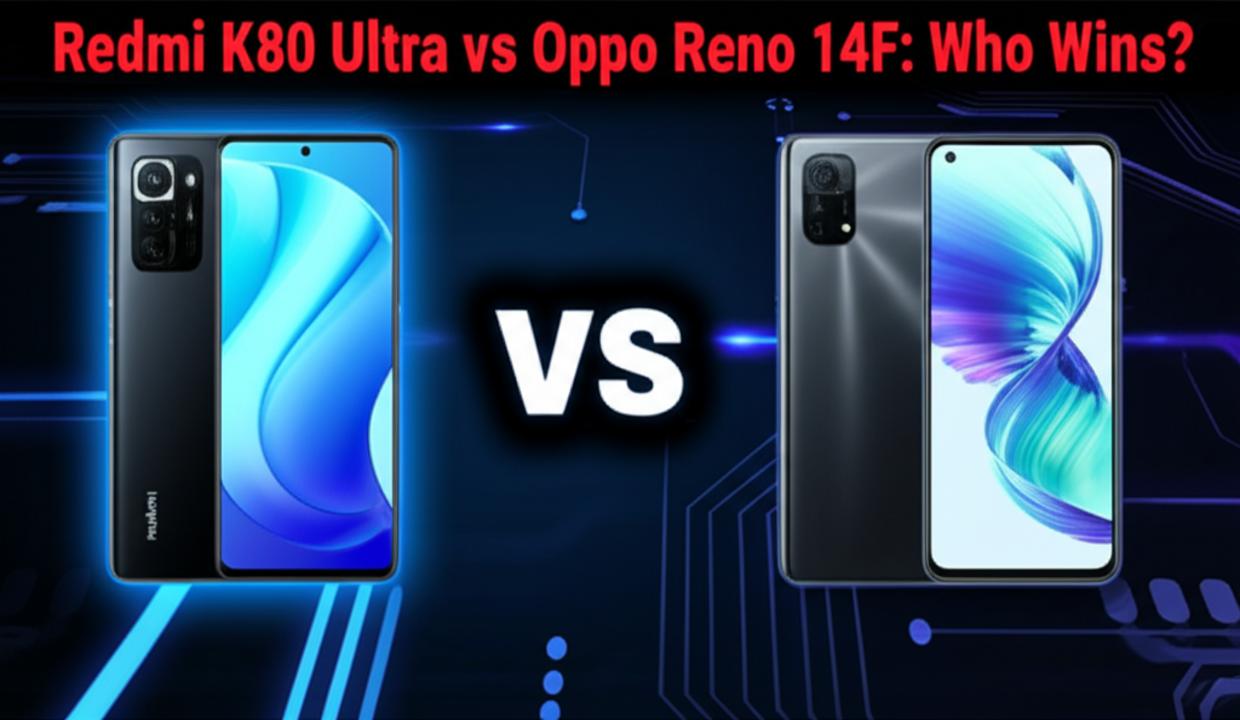
Choosing a new smartphone in the fast-paced world of 5G technology can be a daunting task. With new models constantly emerging, differentiating between excellent value and merely adequate performance is key. Today, we’re diving deep into a fascinating 5G phone comparison between two compelling devices: the highly anticipated Redmi K80 Ultra and the sleek Oppo Reno 14F. Both aim for the mid-to-high-end segment, but as you’ll discover, they take vastly different approaches to delivering a premium experience.
Our goal is to help you decide which device truly stands out as the best 5G phone for your needs. We’ll meticulously examine their core specifications, highlight their strengths and weaknesses, and give you a clear picture of their real-world performance, display quality, battery life, and overall value. Get ready for an in-depth look at the Redmi vs Oppo showdown.
Main Highlights: Redmi K80 Ultra vs Oppo Reno 14F
At a glance, the battle between the Redmi K80 Ultra and the Oppo Reno 14F is heavily skewed towards one contender, particularly when it comes to raw power and display brilliance. The Redmi K80 Ultra appears to be a true “flagship disruptor,” offering top-tier specifications at an incredibly competitive price point.
- Performance Powerhouse: The Redmi K80 Ultra features a significantly more powerful MediaTek Dimensity 9400+ chipset, outclassing the Oppo Reno 14F’s Dimensity 8350.
- Stunning Visuals: Redmi boasts a larger, brighter, and higher refresh rate OLED display with superior peak brightness and additional HDR certifications.
- Enduring Battery: The Redmi K80 Ultra offers a substantially larger battery capacity, promising longer usage times.
- Advanced Cooling: Redmi integrates a dedicated, advanced cooling system for sustained high performance, especially crucial for gaming.
- Aggressive Pricing: The Redmi K80 Ultra enters the market at an unexpectedly low price, offering tremendous value.
While the Oppo Reno 14F is a capable device, its specifications suggest it targets a slightly different user, perhaps prioritizing design over absolute bleeding-edge performance found in its rival.
Performance and Key Features
When it comes to the engine under the hood, the Redmi K80 Ultra is undeniably in a league of its own. It’s powered by the formidable MediaTek Dimensity 9400+ chipset, built on an ultra-efficient 3nm process. This octa-core processor can reach staggering clock speeds of up to 3.73 GHz, delivering an unmatched level of processing power.
In contrast, the Oppo Reno 14F utilizes the MediaTek Dimensity 8350, a capable octa-core chip built on a 4nm process. While respectable, it simply cannot keep pace with the Dimensity 9400+. Benchmark scores tell a clear story: the Redmi K80 Ultra achieves incredible AnTuTu scores of 2.8 million to 3.24 million, showcasing its raw computational and graphical prowess. The Oppo Reno 14F, with its less powerful SoC, registers significantly lower scores.
For demanding applications, intense multitasking, and graphic-heavy gaming, the Redmi K80 Ultra’s superior GPU (Immortalis-G925) ensures a buttery-smooth experience. It also comes equipped with generous 12GB or 16GB of LPDDR5X RAM, providing ample memory for seamless operation. Storage options are equally impressive, with lightning-fast UFS 4.1 technology available in 256GB, 512GB, and even 1TB variants.
A crucial factor for sustained high performance, especially for gamers, is thermal management. The Redmi K80 Ultra incorporates an advanced 3D Ice Cycle Cold Pump cooling system with a massive 6500 mm² dissipation area. This ensures that the device can maintain peak performance during extended gaming sessions or heavy workloads without throttling. Details on Oppo’s cooling system are less prominent, suggesting a more standard approach.
Display and Visual Experience
The display is often the window to a smartphone’s soul, and here, the Redmi K80 Ultra truly shines. It features a sprawling 6.83-inch OLED display, providing vibrant colors, deep blacks, and excellent contrast. What truly sets it apart is its incredibly smooth 144Hz refresh rate, making scrolling, gaming, and video playback feel incredibly fluid and responsive.
Furthermore, the Redmi K80 Ultra’s display boasts a sharp 1.5K resolution (1280×2772 pixels) and an astonishing peak brightness of up to 3200 nits. This makes content visible even under direct sunlight and provides a truly immersive HDR viewing experience, backed by both HDR10+ and Dolby Vision support.
The Oppo Reno 14F, while still offering a good visual experience, lags behind in comparison. It comes with a 6.59-inch AMOLED display, a slightly smaller footprint. It offers a 120Hz refresh rate, which is still excellent but not quite as cutting-edge as Redmi’s 144Hz. Its resolution is approximately 1256×2760 pixels, with a peak brightness of around 1200 nits and HDR10+ support. While its pixel density of ~460 ppi is slightly higher than Redmi’s ~447 ppi due to its smaller size, the overall visual impact of the K80 Ultra is superior due to its higher brightness and refresh rate.
Battery Life and Charging
Endurance is key for any modern 5G phone, and the Redmi K80 Ultra aims to deliver. It comes equipped with a substantial battery, reported to be either 6550 mAh or a massive 7410 mAh, depending on the source. Whichever capacity it ultimately features, it promises exceptional longevity, easily lasting a full day or even two for moderate users.
The Oppo Reno 14F, while respectable, features a 6000 mAh battery. While this is certainly a good capacity, it falls short when compared to the Redmi K80 Ultra’s potentially much larger power pack. Both phones are expected to support fast charging, though specific speeds were not detailed for Oppo. With Redmi’s larger battery, efficient processor, and advanced cooling, it’s poised to offer a superior user experience in terms of battery longevity. For more insights on battery performance, you can check out this comprehensive comparison: Redmi K80 Ultra vs Oppo Reno 14F battery.
Camera Capabilities
Photography is a crucial aspect for many smartphone users, and both devices are expected to deliver competent camera setups. The Redmi K80 Ultra is noted to feature a powerful dual 50 MP main shooter, critically supported by Optical Image Stabilization (OIS). OIS is vital for sharp, blur-free photos and steady video recording, especially in challenging low-light conditions.
Specific details on the Oppo Reno 14F’s camera system were less precisely provided in the latest information. However, Oppo phones generally excel in camera performance, often focusing on advanced computational photography and user-friendly features. While the megapixel count might not always tell the full story, Redmi’s OIS inclusion is a significant advantage for overall image quality and versatility. For a detailed breakdown of camera features, consider visiting sites that compare these models directly, such as MobileInto’s comparison.
Design and Build Quality
While specific design aesthetics can be subjective, the latest hands-on reviews for the Redmi K80 Ultra highlight its “premium build.” This suggests the use of high-quality materials, possibly glass and metal, contributing to a solid and refined feel in hand. Its larger display means a more expansive device, which some users prefer for media consumption and gaming.
Oppo’s Reno series is typically known for its stylish and often slim designs, focusing on aesthetics and comfortable ergonomics. The Oppo Reno 14F is likely to follow this trend, possibly appealing to users who prefer a slightly smaller and more manageable form factor. Both phones are expected to offer a modern, bezel-less look characteristic of contemporary smartphones.
What’s New in 2025?
The year 2025 brings exciting advancements to the smartphone market, and the launch of the Redmi K80 Ultra is a prime example of this evolution. The latest hands-on review video from June 2025 specifically highlights the Redmi K80 Ultra’s position as a “flagship-killer.” This isn’t just about impressive specifications on paper; it’s about delivering a tangible, premium experience that rivals much more expensive devices.
The emphasis on the Redmi K80 Ultra’s 6.83-inch OLED 144Hz display and the raw power of the Dimensity 9400+ processor reinforces its orientation towards high-performance users and avid mobile gamers. It represents a significant leap in offering high-end features at accessible price points, setting a new benchmark for value in the 5G phone market. This truly makes it a contender for the best 5G phone title this year. You can learn more about its official release details and features on Gizchina’s report.
Pricing and Variants
Perhaps one of the most compelling aspects of the Redmi K80 Ultra is its aggressive pricing strategy. With a starting price reported to be around $362 USD, it truly disrupts the market. This pricing positions the Redmi K80 Ultra as an undeniable value champion, offering flagship-level performance and features at a budget-friendly cost.
The Oppo Reno 14F, while not explicitly priced in the provided data, is typically expected to be positioned at a higher price point within its segment. Oppo’s Reno series often commands a premium due to brand positioning, design focus, and marketing efforts. For budget-conscious consumers seeking maximum performance per dollar, the Redmi K80 Ultra presents an extremely attractive proposition. For current pricing and availability, check global retail listings or resources like Kimovil.
Pros and Cons
| Pros (Redmi K80 Ultra) | Cons (Redmi K80 Ultra) |
|---|---|
|
|
| Pros (Oppo Reno 14F) | Cons (Oppo Reno 14F) |
|
|
Bonus Section
- Comparison Table: Redmi K80 Ultra vs Oppo Reno 14F (Summary)
Feature Redmi K80 Ultra Oppo Reno 14F Processor MediaTek Dimensity 9400+ (3nm) MediaTek Dimensity 8350 (4nm) AnTuTu Score 2.8M+ to 3.24M Lower Display Size/Type 6.83″ OLED 6.59″ AMOLED Refresh Rate 144Hz 120Hz Peak Brightness 3200 nits 1200 nits Battery Capacity 7410 mAh (or 6550 mAh) 6000 mAh Starting Price Around $362 USD Typically higher - Competitive Analysis: The Redmi K80 Ultra clearly aims to disrupt the market by offering flagship-tier performance and features at an aggressive mid-range price. It performs significantly better than the Oppo Reno 14F in raw processing power, graphical capabilities, display brilliance, and battery endurance. The Oppo Reno 14F likely competes more on design, camera software optimization (though details are sparse here), and perhaps brand loyalty. For users prioritizing uncompromised performance and value, the Redmi K80 Ultra sets a new bar, positioning it as a strong contender for the best 5G phone in its segment.
- Expert Opinions: Early impressions and expert reviews, particularly from the June 2025 hands-on video, emphasize the Redmi K80 Ultra’s “premium build” and its strong gaming orientation. This underscores its capability to handle demanding tasks with ease, thanks to the powerful Dimensity 9400+ and the effective cooling system. Reviewers are particularly impressed by how much high-end tech Redmi has packed into such an affordable package, making it a truly exciting release.
FAQ
- Which phone is better for gaming, Redmi K80 Ultra or Oppo Reno 14F?
The Redmi K80 Ultra is significantly better for gaming. Its MediaTek Dimensity 9400+ processor, advanced GPU, 144Hz OLED display, and dedicated 3D Ice Cycle Cold Pump cooling system are designed for sustained high performance, ensuring a superior and smoother gaming experience compared to the Oppo Reno 14F.
- How do the displays compare between the Redmi K80 Ultra and Oppo Reno 14F?
The Redmi K80 Ultra boasts a larger 6.83-inch OLED display with a higher 144Hz refresh rate and an impressive 3200 nits peak brightness. The Oppo Reno 14F has a 6.59-inch AMOLED display with a 120Hz refresh rate and 1200 nits peak brightness. Redmi’s display is superior for vibrancy, fluidity, and outdoor visibility.
- Is the Redmi K80 Ultra a good value for money?
Absolutely. With a starting price around $362 USD and featuring a flagship-level processor (Dimensity 9400+), a top-tier display, and a massive battery, the Redmi K80 Ultra offers exceptional value for money, making it a strong contender for the best 5G phone in its price category.
- Which phone has better battery life, Redmi K80 Ultra or Oppo Reno 14F?
The Redmi K80 Ultra is expected to have superior battery life, thanks to its larger battery capacity, which is reported to be between 6550 mAh and 7410 mAh. The Oppo Reno 14F comes with a 6000 mAh battery, which is good but less than Redmi’s offering.
Conclusion
In this comprehensive 5G phone comparison, the Redmi K80 Ultra clearly emerges as the dominant force against the Oppo Reno 14F. From its raw processing power provided by the MediaTek Dimensity 9400+ to its breathtaking 144Hz OLED display with 3200 nits peak brightness, and a colossal battery, the Redmi K80 Ultra offers a flagship-level experience at an incredibly accessible price point starting around $362 USD. It truly lives up to its “flagship-killer” reputation.
While the Oppo Reno 14F is a capable smartphone, offering a balanced set of features with its Dimensity 8350 chip and a decent AMOLED display, it simply cannot match the sheer performance, display brilliance, or aggressive pricing of the Redmi K80 Ultra. For users seeking the absolute best 5G phone in terms of performance per dollar, a superior media consumption experience, and prolonged battery life, the choice is clear.
The Redmi K80 Ultra is not just a strong contender; it’s a game-changer in the mid-to-high-end smartphone market of 2025. If you’re looking for a device that offers top-tier specifications without breaking the bank, this is the one to beat. We hope this #RedmiK80Ultra vs #OppoReno14F comparison helps you make an informed decision!
Feel free to share your thoughts in the comments below or explore more of our detailed reviews. You can learn more about us on our About Us page or reach out via our Contact section.
Watch More in This Video
Disclaimer: All images and videos are sourced from public platforms like Google and YouTube. If any content belongs to you and you want credit or removal, please inform us via our contact page.