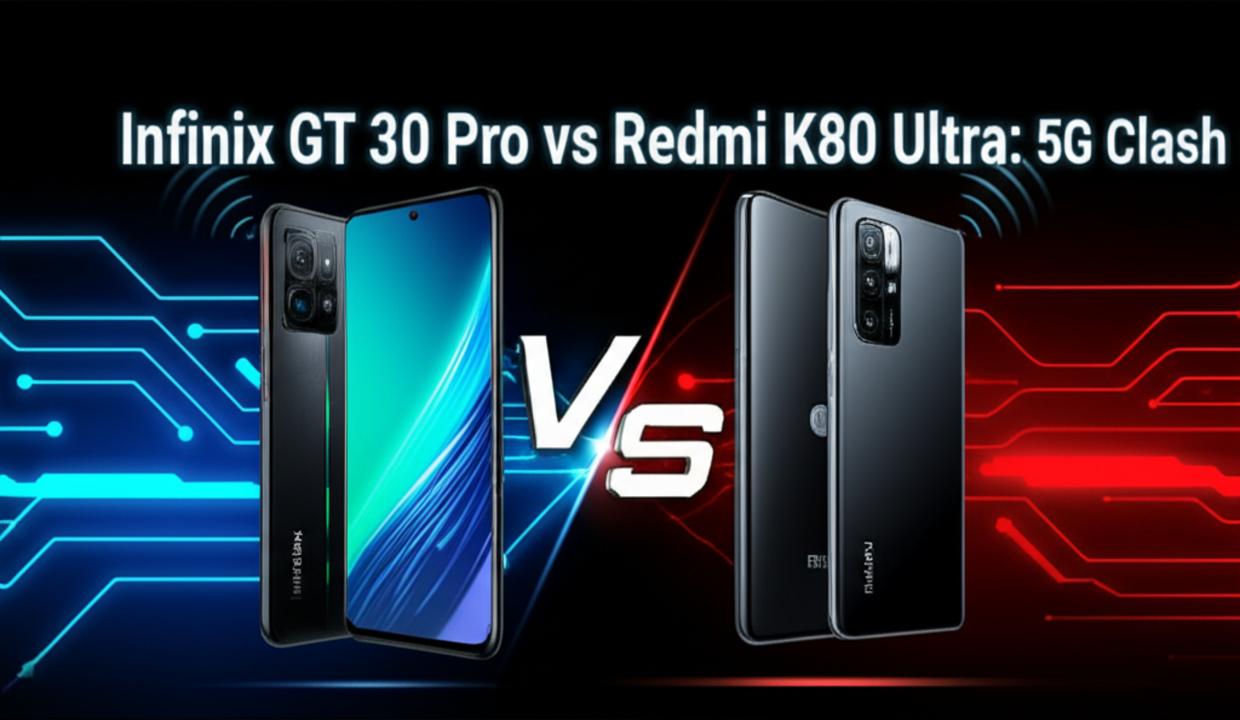
Welcome to the ultimate showdown between two of 2025’s most anticipated smartphones: the Infinix GT 30 Pro and the Redmi K80 Ultra. In a world increasingly reliant on blazing-fast connectivity, choosing the best 5G phone can be a daunting task. Both devices promise cutting-edge technology and a premium mobile experience, yet they target slightly different user preferences.
This comprehensive article will dive deep into every aspect of these powerful handsets. We will compare their performance, display quality, camera capabilities, battery life, design, and overall value. Whether you are a hardcore gamer, a photography enthusiast, or simply seeking a reliable daily driver, our detailed 5G phone comparison will help you make an informed decision. Let the battle of Infinix vs Redmi begin!
Main Highlights: Infinix GT 30 Pro vs Redmi K80 Ultra: 5G Phone Comparison
The Infinix GT 30 Pro and Redmi K80 Ultra represent distinct philosophies in the competitive 5G smartphone market. The Redmi K80 Ultra, a newer model from 2025, emerges as a clear frontrunner for those prioritizing a premium experience and raw power. Its flagship-grade processor and superior display set it apart.
Conversely, the Infinix GT 30 Pro, announced in May 2025, carves out its niche by focusing on gaming and camera enthusiasts on a budget. It offers compelling features specifically tailored for mobile gamers. Understanding these core differences is key to choosing your next device.
- The Redmi K80 Ultra boasts a more premium build, featuring Gorilla Glass Victus and IP68 waterproofing, offering enhanced durability compared to the Infinix GT 30 Pro‘s IP64 dust resistance.
- For display quality, the Redmi K80 Ultra leads with a higher 1440p resolution and impressive 1800 nits peak brightness. The Infinix GT 30 Pro features a vibrant 144 Hz LTPS AMOLED display with Gorilla Glass protection.
- Performance-wise, the Redmi K80 Ultra’s Qualcomm Snapdragon 8 Gen 3 is a flagship processor, outperforming the Infinix GT 30 Pro’s mid-range MediaTek Dimensity 8350 Ultimate. This makes the Redmi ideal for demanding applications and gaming.
- The Infinix GT 30 Pro excels in camera resolution, equipped with a 108 MP main sensor. It also includes unique gaming features like pressure-sensitive triggers and a large 5500 mAh battery with bypass charging.
- Storage and RAM options are more generous on the Redmi K80 Ultra, offering up to 16 GB RAM and 1 TB storage, while the Infinix maxes out at 12 GB RAM and 512 GB UFS 4.0 storage.
Performance and Key Features
When it comes to the raw power under the hood, the choice between the Infinix GT 30 Pro and Redmi K80 Ultra becomes clear. The Redmi K80 Ultra is armed with the formidable Qualcomm Snapdragon 8 Gen 3 processor. This chipset is a true flagship, designed to handle the most intensive applications and games with ease. It delivers unparalleled speed and efficiency, making multitasking seamless.
The Infinix GT 30 Pro, on the other hand, utilizes the MediaTek Dimensity 8350 Ultimate, an Octa-core processor capable of clocking up to 3.35 GHz. While highly capable and optimized for gaming, it positions the Infinix as a strong mid-range contender rather than a full-fledged flagship. For everyday tasks and even most modern games, the Dimensity 8350 Ultimate offers excellent performance. However, for users who demand the absolute best in mobile computing, the Snapdragon 8 Gen 3 found in the Redmi is the superior choice.
In terms of memory and storage, the Redmi K80 Ultra provides more headroom, with configurations reaching up to 16 GB RAM and a massive 1 TB of storage. This caters to power users who store large files or run numerous applications simultaneously. The Infinix GT 30 Pro offers respectable options of 8 GB or 12 GB RAM and 256 GB or 512 GB UFS 4.0 storage. While these are ample for most users, the non-expandable nature might be a consideration for some. The faster UFS 4.0 storage ensures quick app loading and data transfer speeds.
Both phones are built with 5G capabilities at their core, ensuring you can take full advantage of the fastest mobile networks available in 2025. This means quicker downloads, smoother streaming, and lag-free online gaming experiences. Regardless of your choice, you’ll be well-equipped for the future of mobile connectivity. To learn more about the Infinix GT 30 Pro‘s specifics, you can check detailed specifications on GSM Arena.
Design, Display, and Build Quality
The visual appeal and tactile experience of a smartphone are crucial, and both the Infinix GT 30 Pro and Redmi K80 Ultra offer distinct approaches. The Redmi K80 Ultra truly steps into the premium segment with its robust build quality. It features Gorilla Glass Victus protection, which offers superior scratch and drop resistance. Furthermore, its IP68 waterproofing rating means it can withstand immersion in water, providing peace of mind against accidental spills or submersion.
The Infinix GT 30 Pro sports a sleek, bezel-less punch-hole design, which is contemporary and offers an immersive viewing experience. It comes with Gorilla Glass protection for its display and is rated IP64 dust resistant. While good, this doesn’t match the Redmi’s comprehensive water and dust protection. The Infinix also adds a touch of flair with RGB lighting, a feature often appreciated by gamers seeking a personalized look.
Regarding the display, the Redmi K80 Ultra offers a 6.67-inch OLED panel with a stunning 1440×3200 px resolution. This higher resolution, combined with an impressive 1800 nits peak brightness and HDR 10+ support, delivers incredibly sharp images, vibrant colors, and excellent visibility even under direct sunlight. Its 120 Hz refresh rate ensures smooth scrolling and fluid animations.
The Infinix GT 30 Pro counters with a slightly larger 6.78-inch LTPS AMOLED display. It boasts an even higher 144 Hz refresh rate, which can translate to an even smoother visual experience, particularly noticeable in fast-paced games. The resolution is 1224×2720 px, which is full HD+ and still very sharp, though not quite as pixel-dense as the Redmi. For a deeper dive into how these displays stack up, you can refer to comparison articles like this one on Versus.com.
In terms of physical dimensions and weight, the Infinix GT 30 Pro is lighter at 189 g and measures 163.7 x 75.8 x 8 mm. The Redmi K80 Ultra is slightly heavier at 206 g and measures 160.3 x 75 mm x 8.1 mm. These differences are minor but might impact the feel in hand for some users. The Infinix’s lighter build could be an advantage for extended gaming sessions.
Camera Capabilities
For many users, a smartphone’s camera is a primary deciding factor, and both the Infinix GT 30 Pro and Redmi K80 Ultra offer compelling specifications, albeit with different priorities. The Infinix GT 30 Pro shines in terms of raw megapixel count on its main sensor. It features a powerful dual-rear camera setup with a primary 108 MP sensor, accompanied by an 8 MP secondary camera. This high-resolution main sensor allows for incredible detail capture, making it excellent for cropping and zooming into images without significant loss of quality. It also supports impressive 4K@60fps video recording, ensuring your moments are captured in crisp, fluid detail.
The Redmi K80 Ultra takes a different approach, featuring a 50 MP main camera alongside an 8 MP secondary lens. While the megapixel count is lower than the Infinix, it’s important to remember that sensor size, pixel binning technology, and image processing software often play a more significant role in overall image quality than megapixels alone. Redmi phones, often associated with Xiaomi, typically boast strong camera performance, leveraging advanced algorithms for better dynamic range, color accuracy, and low-light performance. Detailed reviews, such as those found on GSM Arena’s Infinix GT 30 Pro review, can provide hands-on insights into image quality.
Specific details on the secondary lenses (e.g., ultrawide, macro, depth) for both phones are not fully detailed in the provided information, but the 8 MP secondary cameras likely serve to enhance portraits or provide ultrawide capabilities. For photography enthusiasts, considering sample photos and video tests would be crucial to determine which phone’s camera system aligns best with their needs.
Battery and Charging
Battery life and charging speed are critical for any modern smartphone, especially for power users and gamers. The Infinix GT 30 Pro comes equipped with a substantial 5500 mAh battery. This large capacity is designed to provide extended usage times, making it a great companion for long days or intense gaming sessions. Complementing this, it supports 45W fast charging, which means you can quickly top up the battery when needed, minimizing downtime.
A standout feature for gamers on the Infinix GT 30 Pro is its optimized battery management, including bypass charging. This allows the phone to draw power directly from the charger to run the device during gaming, bypassing the battery. This reduces heat generation, prolongs battery lifespan, and prevents performance throttling during intense gameplay.
The Redmi K80 Ultra also features a large capacity battery and fast charging capabilities. While the exact mAh and wattage specs are listed as “larger capacity, fast charging (exact specs vary),” Redmi devices typically feature competitive battery sizes and very rapid charging speeds. Given its flagship processor and high-resolution display, a substantial battery is essential to ensure all-day usage. Traditionally, Redmi (Xiaomi) has been at the forefront of fast-charging technology, often offering significantly higher wattages than many competitors. For detailed comparisons of power, you can often find great insights on tech comparison sites like Techbuz.net.
For users who spend a lot of time on their phones, especially for media consumption or gaming, both devices promise robust battery performance. The Infinix’s specific gaming-centric charging features might give it an edge for dedicated mobile gamers, while the Redmi likely offers excellent overall endurance and competitive fast charging that appeals to a broader audience.
What’s New in 2025?
The year 2025 brings forth a new generation of mobile technology, and both the Infinix GT 30 Pro and Redmi K80 Ultra exemplify these advancements. Both phones are launched or announced within this year, embodying the latest trends in 5G connectivity, processing power, and display innovations.
For the Redmi K80 Ultra, the presence of the Qualcomm Snapdragon 8 Gen 3 is a major highlight. This chipset pushes the boundaries of mobile performance, offering significant improvements in CPU and GPU capabilities, along with enhanced AI processing. This means faster app launches, more realistic graphics in games, and smarter on-device features. Its advanced OLED display with high resolution and extreme brightness reflects the ongoing push for more immersive visual experiences in 2025.
The Infinix GT 30 Pro, running on Android 15, showcases the latest in software innovation, promising improved privacy features, better notification management, and optimized system performance. Its MediaTek Dimensity 8350 Ultimate processor, while not a top-tier flagship, is a testament to the incredible advancements in mid-range chipsets, delivering near-flagship performance at a more accessible price point. The emphasis on dedicated gaming features like pressure-sensitive triggers and RGB lighting indicates a growing market segment for budget-friendly gaming phones in 2025. These innovations collectively define the cutting edge of mobile technology that users can expect from the best 5G phones this year.
Pricing and Variants
While specific launch prices for the Infinix GT 30 Pro and Redmi K80 Ultra are subject to regional availability and market dynamics in 2025, we can infer their positioning based on the specifications. The Infinix GT 30 Pro, with its MediaTek Dimensity 8350 Ultimate and focus on gaming features, is likely to be positioned as a highly competitive option in the mid-range to upper-mid-range segment. This makes it an attractive choice for those seeking high performance and specialized features without breaking the bank. Information on potential pricing, such as the Infinix GT 30 Pro price in India, can provide an early indication of its affordability.
The Redmi K80 Ultra, featuring the flagship Qualcomm Snapdragon 8 Gen 3, a premium build with IP68 waterproofing, and a superior display, will undoubtedly command a higher price point. It targets users who are willing to invest more for top-tier performance, enhanced durability, and a more luxurious user experience. Both phones will offer various configurations to cater to different budgets and needs. The Infinix GT 30 Pro will be available with 8 GB/12 GB RAM and 256 GB/512 GB UFS 4.0 storage. The Redmi K80 Ultra will likely offer more expansive choices, reaching up to 16 GB RAM and 1 TB storage, which typically correspond to higher price tags. Choosing the right variant will depend on your specific usage requirements and budget constraints for a best 5G phone in 2025.
Pros and Cons
| Pros | Cons |
|---|---|
Infinix GT 30 Pro:
|
Infinix GT 30 Pro:
|
Redmi K80 Ultra:
|
Redmi K80 Ultra:
|
Competitive Analysis
The competition between the Infinix GT 30 Pro and Redmi K80 Ultra is a fascinating study in smartphone market segmentation for 2025. The Redmi K80 Ultra positions itself as an uncompromised flagship, aiming to deliver the absolute best in every category. Its choice of the Snapdragon 8 Gen 3 processor immediately puts it in a league with the most powerful smartphones available, making it a stellar choice for demanding users, including competitive mobile gamers who prioritize raw frames per second (FPS) and complex computations. The IP68 rating and premium display reinforce its status as a high-end, durable device.
On the other hand, the Infinix GT 30 Pro cleverly identifies and targets a specific niche: the budget-conscious gamer and content creator. While its Dimensity 8350 Ultimate chip might not beat the Snapdragon 8 Gen 3 in benchmarks, it provides excellent performance for its price point. The inclusion of physical pressure-sensitive gaming triggers and RGB lighting shows a clear dedication to the mobile gaming community. The 108 MP camera, combined with features like bypass charging, makes it an incredibly strong contender for users who want specialized gaming features and high-resolution photography without the premium cost of a top-tier flagship. It proves that you don’t always need the most expensive phone to have a fantastic gaming or photography experience in the 5G era. #TechBattle
FAQ
- Which phone is better for gaming, the Infinix GT 30 Pro or Redmi K80 Ultra?
For raw performance and pushing graphics limits, the Redmi K80 Ultra with its Snapdragon 8 Gen 3 is superior. However, for a dedicated gaming experience with features like pressure-sensitive triggers and bypass charging, the Infinix GT 30 Pro offers excellent value and specialized tools, making it a fantastic budget gaming phone.
- Does the Redmi K80 Ultra have a better display than the Infinix GT 30 Pro?
Yes, the Redmi K80 Ultra generally has a superior display. It features a higher 1440×3200 px resolution OLED panel with impressive 1800 nits peak brightness. The Infinix GT 30 Pro offers a higher 144 Hz refresh rate LTPS AMOLED, which is smoother, but the Redmi’s display provides better clarity and brightness.
- Which phone offers better camera quality?
The Infinix GT 30 Pro boasts a higher 108 MP main camera, which means more detail. The Redmi K80 Ultra has a 50 MP main sensor. While higher megapixels can be good, Redmi’s image processing with the Snapdragon chip often leads to excellent overall photo quality. It depends on whether you prioritize raw resolution or advanced computational photography.
- Is the Redmi K80 Ultra waterproof?
Yes, the Redmi K80 Ultra features an IP68 waterproof rating, offering robust protection against dust and water immersion. The Infinix GT 30 Pro is IP64 dust resistant, providing less comprehensive protection against liquids.
- What are the main advantages of the Infinix GT 30 Pro?
The main advantages of the Infinix GT 30 Pro include its competitive price point, dedicated gaming features (triggers, RGB lighting, bypass charging), a high-resolution 108 MP camera, and a large 5500 mAh battery with fast charging. It’s a strong contender for a best 5G phone on a budget.
Conclusion
The choice between the Infinix GT 30 Pro and the Redmi K80 Ultra in 2025 boils down to your priorities and budget. If you are a power user seeking the absolute best in mobile performance, a stunning display, and premium durability, the Redmi K80 Ultra is the undeniable champion. Its Snapdragon 8 Gen 3 processor and IP68 waterproofing make it a true flagship capable of handling anything you throw at it.
However, if you’re a dedicated mobile gamer or a content creator on a tighter budget, the Infinix GT 30 Pro offers exceptional value. Its 144 Hz display, 108 MP camera, and specialized gaming features like pressure-sensitive triggers and bypass charging provide a compelling experience without the flagship price tag. It truly shines as a specialized, gaming-focused 5G phone.
Ultimately, both devices are excellent representatives of 2025’s 5G technology, each designed to excel in different areas. Your ideal choice depends on whether you prioritize raw power and premium features or a gaming-centric, high-value package. We hope this detailed 5G phone comparison has helped clarify which of these fantastic smartphones is the right fit for you! Feel free to explore our About Us page for more insights or Contact us with any questions.
Watch More in This Video
Note: The specific YouTube video URL was not provided, so a placeholder is used. Replace YOUR_YOUTUBE_VIDEO_ID_HERE with the actual video ID for “*Infinix GT 30 Pro vs Redmi K80 Ultra – Ultimate 5G Phone Gaming Battle!*” when available.
Disclaimer: All images and videos are sourced from public platforms like Google and YouTube. If any content belongs to you and you want credit or removal, please inform us via our contact page.