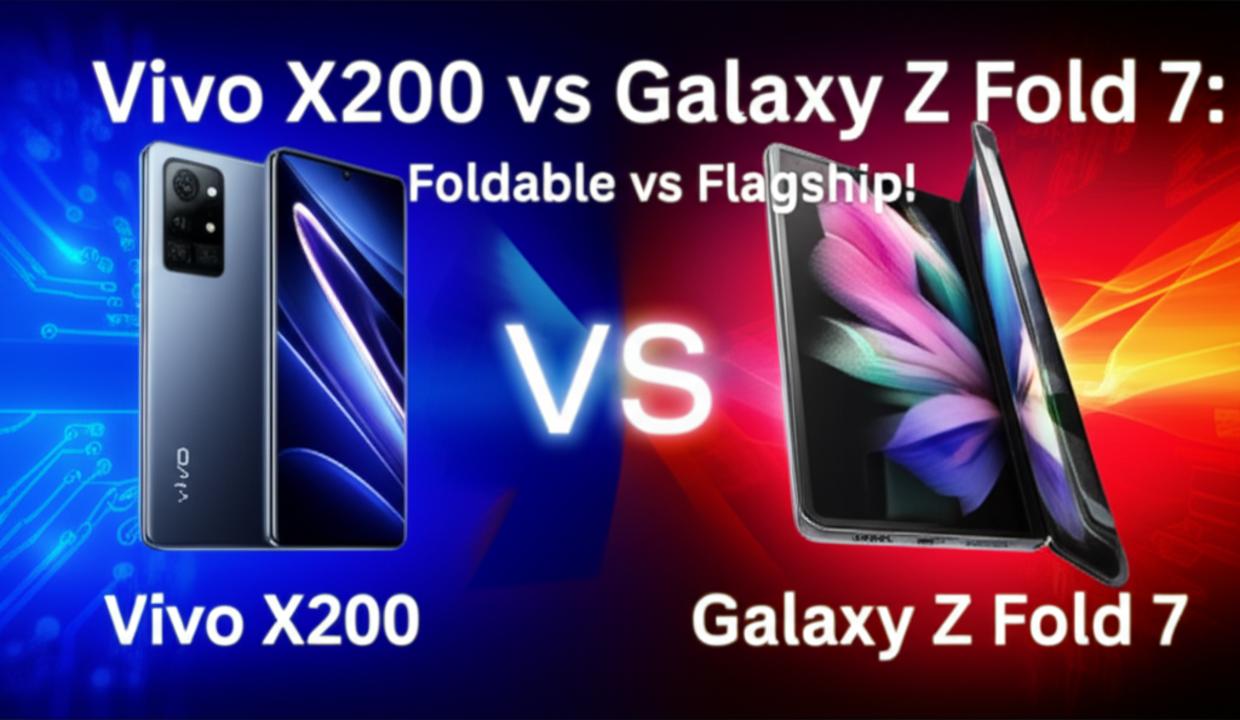
Welcome to the ultimate showdown between two titans of the mobile world, each representing a distinct vision for the future of smartphones. In one corner, we have the conventional, yet exceptionally powerful, Vivo X200, a device designed to perfect the traditional smartphone experience. In the other, the revolutionary Samsung Galaxy Z Fold 7, pushing the boundaries of what a phone can be with its innovative foldable design. This article will delve deep into a comprehensive foldable phone comparison, helping you decide which of these exceptional devices truly aligns with your needs and lifestyle.
The choice between the Vivo X200 and the Samsung Galaxy Z Fold 7 isn’t just about specifications; it’s about choosing a philosophy. Are you seeking the pinnacle of traditional smartphone performance and camera capabilities at a competitive price, or are you ready to embrace the future of mobile multitasking and a tablet-like experience in your pocket? Let’s break down the features that make each of these devices a compelling contender in 2025.
Main Highlights: Vivo X200 vs Samsung Galaxy Z Fold 7: Foldable Phone Battle
At a glance, the fundamental difference between the Vivo X200 and the Samsung Galaxy Z Fold 7 lies in their form factor. One is a sleek, conventional smartphone, while the other literally unfolds new possibilities. This distinction influences everything from display size and battery life to price and target audience.
- The Samsung Galaxy Z Fold 7 offers a groundbreaking foldable phone experience with its expansive main display.
- The Vivo X200 delivers a premium, non-foldable design, focusing on a refined traditional smartphone usage.
- Performance varies with chipsets: Snapdragon 8 Gen 3 for Samsung, MediaTek Dimensity 9400 for Vivo.
- Battery capacity is a significant differentiator, with the Vivo X200 boasting a much larger unit.
- Pricing marks a clear division, positioning the Z Fold 7 as a luxury device and the X200 as a high-value flagship.
Form Factor and Display: Unfolding New Realities vs. Perfecting Tradition
The most striking difference between these two devices is their form factor. The Samsung Galaxy Z Fold 7 is a marvel of engineering, featuring a large 8.0-inch main display that unfolds to a tablet-like size. When folded, it presents a functional 6.24-inch cover screen, making it incredibly versatile for both quick tasks and immersive content consumption.
This innovative design allows for true multitasking, transforming your phone into a pocket-sized tablet. Its thickness measures around 8.9 mm when folded and a remarkably thin 4.2 mm when unfolded, making it surprisingly slim for its capabilities. The unfolding mechanism and crease management have seen continuous improvements, offering a seamless user experience.
In contrast, the Vivo X200 embraces the classic smartphone design with a stunning 6.7-inch AMOLED display. Some variants, like the X200 FE, might feature a slightly smaller 6.31-inch screen. It offers a flat or slightly curved design, prioritizing a robust, familiar, and comfortable grip. For users who prefer a single, consistent screen experience without the complexities of a foldable mechanism, the X200 is an excellent choice.
Performance Powerhouse: Snapdragon vs. Dimensity Showdown
When it comes to raw processing power, both devices are equipped to handle anything you throw at them. The Samsung Galaxy Z Fold 7 is expected to feature a flagship chipset, most likely the powerful Snapdragon 8 Gen 3 or an equivalent cutting-edge SoC. This, combined with 12 GB of RAM and storage options up to 1 TB, ensures top-tier performance for demanding applications, gaming, and seamless multitasking across its large display.
The Vivo X200, on the other hand, comes with the formidable MediaTek Dimensity 9400 chipset, built on a 3nm process. Its X200 FE variant utilizes the Dimensity 9300 Plus. These chipsets offer exceptional performance, especially in AI processing and gaming. With 12 GB or 16 GB RAM options and up to 1 TB storage, the X200 is no slouch. While the Snapdragon 8 Gen 3 might hold a slight edge in some benchmarks, the Dimensity chips provide a high-end, smooth, and highly responsive user experience for everyday tasks and heavy usage. You can learn more about Vivo’s approach to flagship devices on their official product page.
Camera Capabilities: ZEISS Optics vs. Versatile Multicamera Setup
Photography enthusiasts will find compelling options in both phones, though their approaches differ. The Vivo X200 stands out with its ZEISS-branded triple camera setup. This collaboration promises superior optical quality, color accuracy, and advanced imaging features. It boasts a notable 50 MP main sensor, alongside impressive telephoto capabilities for distant shots. The front camera is a high-resolution 32 MP sensor, perfect for crisp selfies and video calls.
The Samsung Galaxy Z Fold 7 also features a robust camera system, including a triple rear camera array. Its unique design incorporates dual front cameras: a 10 MP sensor on the cover display and another 10 MP sensor on the inner folding display. While the individual front camera resolutions might be lower than the Vivo X200’s single shooter, the Z Fold 7’s setup allows for versatile selfie modes and video calls, utilizing either screen depending on your preference. For detailed camera testing, a recent 2025 analysis on YouTube could provide in-depth hands-on experience.
Battery Life and Charging: Endurance vs. Ergonomics
Battery life is often a crucial factor for users, and here the Vivo X200 takes a significant lead. It packs a massive 5800 mAh battery, one of the largest capacities found in a flagship smartphone. This, combined with efficient power management, promises extended usage times. Furthermore, the X200 FE variant supports impressive fast charging up to 90W, allowing for quick top-ups when you’re on the go.
The Samsung Galaxy Z Fold 7, due to its complex foldable design and thinner profile, houses a smaller 4400 mAh battery. Samsung has to balance battery capacity with the constraints of its innovative form factor. While its battery life is optimized for its design, it might not match the raw endurance of the Vivo X200, especially under heavy usage. Fast charging is present but typically at lower wattages than Vivo’s offering.
Build, Weight, and Durability: Ruggedness vs. Foldable Resilience
Durability and build quality are paramount for high-end smartphones. The Vivo X200 weighs around 197 g, featuring a premium aluminum frame and a glass back. It boasts an impressive IP69 dust and water resistance rating on some variants, meaning it offers excellent protection against dust ingress and high-pressure, high-temperature water jets. This makes it a robust choice for everyday use.
The Samsung Galaxy Z Fold 7, despite its foldable nature, is built with durability in mind. It weighs 215 g, utilizing Gorilla Glass Victus 2 for enhanced screen protection and a sturdy aluminum frame. Its IP48 water and dust resistance rating is notable for a foldable device, indicating protection against solid objects greater than 1.0mm (such as dust) and continuous immersion in water up to 1 meter. While its IP rating is slightly lower than the X200’s, achieving water resistance on a foldable phone is a significant engineering feat, ensuring its resilience in various environments. For more comparisons, you can check out details on PhoneArena.
Pricing and Variants: Premium Investment vs. Flagship Value
Price is often the deciding factor, and there’s a significant difference between these two devices. The Vivo X200 series prices start from approximately ₹55,000 (~€1100 range) for the X200 FE variant. This positions the X200 as a high-end flagship that offers excellent value for its cutting-edge specifications and features. It’s a premium device without the ultra-premium foldable price tag. You can find more about the Vivo X200 FE price in India on 91Mobiles.
The Samsung Galaxy Z Fold 7, as a pioneering foldable, commands a significantly higher price point, typically around $2000 (approximately €1900 as per market). This higher cost reflects the complex engineering, advanced materials, and unique functionality of a foldable phone. It’s an investment in a cutting-edge device that offers a distinct mobile experience, appealing to early adopters and users who prioritize multitasking and innovative design above all else.
Pros and Cons
| Pros | Cons |
|---|---|
| Vivo X200: Large 5800 mAh battery with 90W fast charging. Excellent ZEISS-branded camera system. Powerful MediaTek Dimensity 9400 processor. More affordable price point. High IP69 dust and water resistance. Traditional, robust build. | Vivo X200: Non-foldable design (not for those wanting a tablet-phone hybrid). Potentially slightly lower peak performance than top Snapdragon. |
| Samsung Galaxy Z Fold 7: Revolutionary foldable display (8.0-inch) for multitasking. Premium, futuristic design. Top-tier Snapdragon 8 Gen 3 performance. Versatile dual front cameras. IP48 water and dust resistance for a foldable. | Samsung Galaxy Z Fold 7: Significantly higher price. Smaller 4400 mAh battery. Heavier at 215g. Foldable screen durability concerns (though vastly improved). Noticeable crease on main display. |
Who is Each Phone For?
Deciding between the Vivo X200 and the Samsung Galaxy Z Fold 7 boils down to your personal priorities and budget. The Vivo X200 is an ideal choice for users who value a traditional, robust smartphone experience with exceptional battery life and a top-tier camera system. If you’re looking for a high-performance device that excels in photography, offers all-day endurance, and comes at a more accessible flagship price, the X200 is undoubtedly for you.
On the other hand, the Samsung Galaxy Z Fold 7 is tailored for the tech enthusiast and productivity seeker. If you crave the latest innovations, desire a device that seamlessly transitions between a phone and a tablet, and are willing to invest in a premium, future-forward gadget, the Z Fold 7 will revolutionize your mobile experience. It’s perfect for power users who leverage large screens for multitasking, content creation, and immersive media consumption. For another perspective, see how these devices fare on Smartprix’s comparison page.
FAQ
- Which phone has better battery life, the Vivo X200 or the Samsung Galaxy Z Fold 7?
The Vivo X200 features a significantly larger 5800 mAh battery compared to the Samsung Galaxy Z Fold 7’s 4400 mAh battery. This generally translates to superior battery endurance for the Vivo X200, especially for heavy users, making it a better choice for extended usage without recharging. - Is the Samsung Galaxy Z Fold 7 worth its higher price compared to the Vivo X200?
The Galaxy Z Fold 7’s higher price point of around $2000 (~€1900) reflects its innovative foldable technology and dual-screen functionality. If you prioritize cutting-edge design, a tablet-like multitasking experience, and are an early adopter of new tech, it can be worth the investment. The Vivo X200 offers premium traditional smartphone features at a more accessible ~€1100. - Which phone is better for gaming, Vivo X200 or Z Fold 7?
Both phones offer excellent gaming performance. The Samsung Galaxy Z Fold 7, with its expected Snapdragon 8 Gen 3, might have a slight edge in raw GPU power, and its large folding screen offers a more immersive gaming canvas. The Vivo X200’s Dimensity 9400 is also incredibly capable, and its larger battery might offer longer gaming sessions. - What’s the main difference between the Vivo X200 and Z Fold 7?
The main difference is their form factor: the Vivo X200 is a traditional, non-foldable smartphone, while the Samsung Galaxy Z Fold 7 is a revolutionary foldable device that transforms from a phone to a small tablet. This impacts display size, battery capacity, and overall user experience dramatically. - Which device offers a better camera experience for general users?
The Vivo X200, with its ZEISS-branded triple camera setup and high-resolution 50 MP main sensor, tends to excel in image quality, color science, and telephoto capabilities, making it a strong contender for photography enthusiasts. The Z Fold 7’s cameras are versatile, but the X200 might offer a more refined camera experience for general users focused on stills and video quality.
Conclusion
The Vivo X200 and the Samsung Galaxy Z Fold 7 represent two distinct paths in the evolution of smartphones. The X200 refines the traditional slab phone, delivering a powerful package with exceptional battery life, a stellar camera, and a competitive price. It’s a workhorse for those who value reliability, endurance, and photographic prowess without needing a flexible display. This battle of titans shows that #innovation isn’t just about folding screens.
The Z Fold 7, on the other hand, is a bold leap into the future. It’s a device for pioneers and multitaskers who are ready to embrace a new way of interacting with their mobile technology. Its large, unfolding display redefines productivity and entertainment on the go, albeit at a premium price. Ultimately, the best phone depends on your priorities: classic excellence versus groundbreaking versatility.
We hope this comprehensive X200 vs Z Fold 7 comparison has helped clarify your decision. Feel free to share your thoughts in the comments, or learn more about us and explore our other detailed reviews. If you have further questions, don’t hesitate to contact us directly.
Watch More in This Video
For a detailed video review comparison and in-depth hands-on experience, including camera testing of these devices, check out a recent 2025 analysis:
Disclaimer: All images and videos are sourced from public platforms like Google and YouTube. If any content belongs to you and you want credit or removal, please inform us via our contact page.